How to Close Background Apps Properly on Android Phone (Boost Speed & Save Battery)
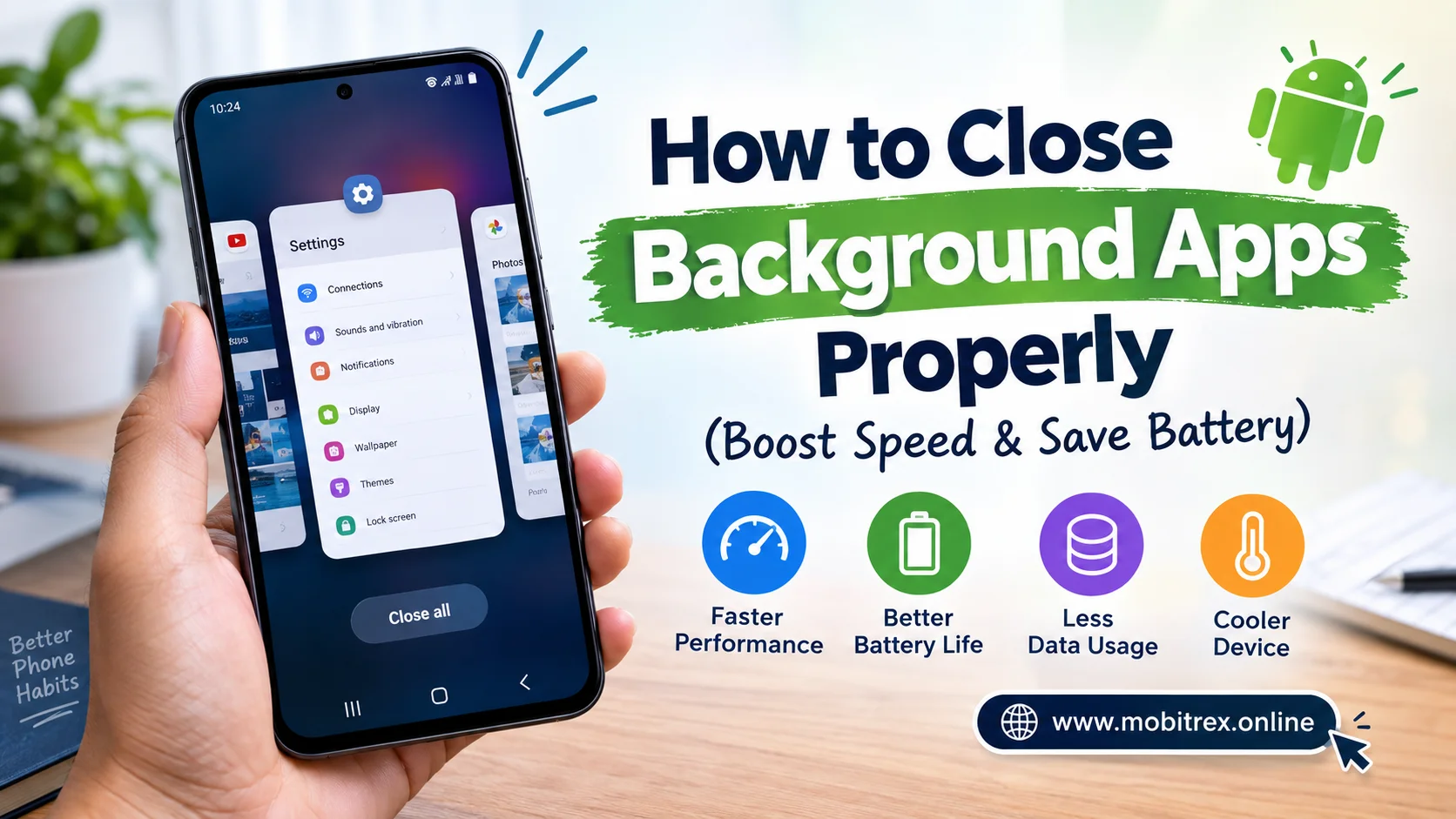
Your phone feels slow, the battery drains fast, apps take longer to open, or mobile data seems to disappear quickly. One possible reason is too many background apps continuing to work when you are not actively using them.
Android allows apps running in the background to perform useful tasks such as syncing information, delivering notifications, refreshing content, tracking location, and completing downloads. However, some applications can use excessive system resources, RAM, and CPU.
That does not mean you should close every application constantly. In fact, repeatedly clearing all your recent apps can sometimes make the phone work harder because applications have to reload when opened again. The better approach is to identify the apps responsible for excessive background app activity and then use the correct Android setting to control them.
In this guide, you'll learn how to close background apps properly, how to use Recent Apps, when to use Force Stop, how to restrict background activity, how to control background data usage, how battery optimization works, and how to use advanced options such as Developer Options when necessary.
- Why Background Apps Are a Problem
- Step-by-Step (Universal Android Method)
- Quick Wrap-Up
- Frequently Asked Questions
Why Background Apps Are a Problem
When several applications continue running in the background, they can compete for system resources, including memory and processing power. On a phone with limited RAM, excessive background activity may contribute to slow app loading, lag, stuttering, or an overall less responsive experience. If your device still feels slow after managing background apps, follow this guide on how to make Android phone faster.
Background activity can also increase battery consumption, battery drain, and mobile data usage when apps refresh content, check for updates, synchronize information, or download data. Unusual warmth, rapid battery drain, noticeable lag, and high data usage can also indicate that an application is using excessive resources. If your phone is overheating, see our guide on how to fix Android phone overheating.
Not every background process is harmful, though. Messaging apps may need background access for notifications, music apps for playback, navigation apps for location services, and cloud applications for synchronization. You should also review app permissions for location, camera, and microphone. The goal is to control unnecessary background activity without disrupting useful services.
Step-by-Step (Universal Android Method)
1. Open Recent Apps
The easiest way to close a recently used application is through the Recent Apps screen. Depending on your navigation system, tap the square Recent Apps button or swipe up from the bottom of the screen and hold briefly. You will see cards representing recently used applications. Find the application you no longer need and prepare to remove it from the Recent Apps list.
However, remember that the Recent Apps screen is not exactly the same thing as a complete background-process manager. Swiping an app away can stop its main process, but some background services may continue when Android considers them necessary. This is why simply removing every app from Recent Apps is not always the best way to improve battery life or performance.
For more information about opening and closing apps on Android, see Google's official Android guide for finding, opening, and closing apps .
2. Swipe Apps Away
Swipe the unwanted application card left, right, or upward, depending on your phone's interface. This is useful when an application has become stuck, is behaving unexpectedly, or you simply want to remove it from your recent applications.
When you repeatedly close frequently used apps, Android may need to reload their processes and content from the beginning the next time you open them. That can require additional CPU and memory, potentially reducing some of the battery-saving benefit you expected. So, use Recent Apps for convenience, not as your only form of background app management.
3. Tap "Close All"
If your Android phone provides a Close All button, you can use it to remove multiple recent apps at the same time. This is useful when your Recent Apps screen has become crowded and you want to clear it quickly.
However, Close All does not permanently prevent applications from running in the background. Apps that have background services, synchronization requirements, notifications, or other system permissions may continue performing certain tasks. If a specific application repeatedly consumes battery or mobile data after you close it, use the next methods instead of repeatedly tapping Close All.
4. Force Stop a Background App
If a specific application keeps running in the background, uses excessive battery or mobile data, or stops responding normally, you can use Force Stop to stop the app immediately.
To force stop an app, go to:
Settings → Apps → Select the App → Force Stop
Depending on your Android version and phone manufacturer, the exact menu names may be slightly different. After selecting Force Stop, confirm the action if Android asks you to do so.
Force Stop is useful when an application is frozen, behaving unexpectedly, repeatedly consuming excessive resources, or continuing to run when you no longer need it. However, you should not routinely force stop every app because Android normally manages background processes automatically.
Keep in mind that force stopping an application may temporarily stop its notifications, background synchronization, or other active services. The app can start running again when you open it or when Android allows its background activity to resume.
For apps that repeatedly consume battery or resources, check their Battery Usage and background activity settings instead of repeatedly using Force Stop.
5. Restrict Background Usage (Important)
This is one of the most useful methods when you want a longer-term solution.
Go to:
Settings → Apps → Select the app → Battery
Depending on your Android version and phone manufacturer, you may see different options. Common battery-management states include:
- Unrestricted — the application can run freely in the background.
- Optimized — Android manages its background activity automatically.
- Restricted — the application is prevented from freely running background activity when you are not actively using it.
The exact wording can vary between Android devices, but the purpose is similar: give Android more control over applications that consume excessive resources.
For example, a rarely used game, shopping app, news application, or social media app may not need unrestricted background access. Restricting such applications can reduce unnecessary background activity and battery consumption.
On the other hand, avoid aggressively restricting apps that you depend on for immediate notifications. Messaging apps, email applications, alarms, navigation, music playback, and similar services may require background access to function correctly.
Check Battery Usage Before Restricting an App
Rather than guessing which application is causing the problem, check Battery Usage first.
Go to:
Settings → Battery → Battery Usage
The exact wording can be Battery Usage by App or something similar. Select an application to see its battery activity and, where supported, compare its foreground and background usage.
An app with unusually high background activity despite very little active use deserves closer attention. This is a more targeted approach than restricting every application on your phone.
Restrict Background Data
Battery usage is not the only thing you can control. Android can also allow you to restrict background data usage for individual applications.
A common path is:
Settings → Apps → Select App → Mobile Data / Data Usage
Look for an option such as Background data and turn it off if your device provides that control.
This can be particularly useful for social media apps, news applications, video services, cloud storage apps, and other applications that frequently refresh content. If downloads are stuck, you can also check our guide on fixing Google Play Store download pending issues. Restricting background data prevents an app from freely sending or receiving mobile data when you are not actively using it.
6. Disable Auto-Start Apps
Some Android phones provide Auto-start, auto-start permissions, or a Startup manager.
These controls determine which applications can automatically start when the phone boots or when certain system events occur.
If an app keeps returning after you close it, check your device settings for an auto-start option. You can also learn how to stop apps from installing automatically on Android if unwanted applications keep appearing on your device.
A general path may look like:
Settings → Apps / Permissions → Auto-start / Startup manager
The exact location depends on the manufacturer and Android version.
Disable auto-start for applications that do not need to launch automatically. This can reduce unnecessary background activity and may improve boot time and overall device performance.
Be careful with essential system apps. Some manufacturer services and applications need automatic startup to perform their intended functions.
7. Use Battery Optimization and Battery Saver
Android includes built-in battery optimization features that can manage background activity without requiring you to manually close every app.
For additional battery-saving guidance, see Google's official Android battery guide .
Go to:
Settings → Battery
Look for Battery Optimization, Adaptive Battery, Battery Saver, or Power Saving Mode, depending on your device.
Android's Adaptive Battery can learn which applications you use frequently and which ones you rarely open. It can then restrict background activity for applications that you rarely use while allowing frequently used apps greater access.
Android also uses Doze and App Standby to manage background activity and reduce unnecessary power use. For technical details, see the official Android Developers guide to Doze and App Standby .
For individual applications, you may also find battery controls under:
Settings → Apps → Select App → Battery
For most apps, Optimized is the normal setting that lets Android manage background activity automatically.
Turn On Power Saving Mode When Needed
Power Saving Mode can reduce power consumption when your battery is running low.
Depending on the device, it may reduce CPU performance, limit background synchronization, reduce certain background activities, or change display behavior to extend battery life.
You can use it when you need longer battery runtime rather than keeping every application manually restricted.
7. Restart Your Phone
A restart is a simple troubleshooting step when your phone suddenly becomes slow, applications freeze, or background processes appear to be behaving abnormally. If your phone still feels slow or freezes frequently, you can also read our guide on how to fix Android phone hanging problems.
Restarting the phone gives Android a fresh system session and closes active processes.
However, restarting is not a permanent solution for an application that repeatedly consumes excessive resources. If the same app appears high in Battery Usage after multiple checks, investigate that particular application instead.
If restarting does not solve unusual background activity or application issues, you can use Android Safe Mode to check whether a third-party application is causing the problem.
Use Developer Options for Advanced Background Process Control
Android also provides Developer Options for advanced users.
To enable them, a common method is:
Settings → About Phone → Build Number
Tap Build Number seven times until Android confirms that Developer Options have been enabled. Then return to Settings and open Developer Options.
Inside Developer Options, you may find Background process limit under the Apps section.
This allows you to limit the number of background processes Android keeps running simultaneously.
However, this is an advanced setting and should not be changed casually. An aggressive background process limit can interfere with multitasking and may cause important background services to stop unexpectedly. It can be useful for troubleshooting or certain older devices with limited RAM, but it is not necessary for most users.
Check Running Services
Developer Options may also provide Running Services, which can show processes currently active on the device, including system processes and individual applications.
This can help advanced users understand which apps are consuming memory and running processes. For everyday troubleshooting, however, the normal Battery Usage screen is generally easier to understand.
Quick Wrap-Up
You do not need to close every app constantly to keep your Android phone fast.
Managing background apps is one way to improve speed, but you can also follow our guide on how to make Android phone faster for more performance optimization tips.
A better strategy is to identify applications that actually consume excessive battery, data, CPU, RAM, or other system resources and then apply the appropriate restriction.
Start with these three actions:
- Close unnecessary applications from Recent Apps when you need a quick cleanup.
- Use Restricted background usage for selected apps that repeatedly consume resources.
- Keep Battery Optimization and Adaptive Battery enabled.
If mobile data is a concern, also check Background data for individual applications and disable it where appropriate.
You can review your Battery Usage list periodically rather than relying on guesswork. Checking it once in a while can help you identify newly installed apps or applications that have started consuming more power than expected.
The goal is selective background app management, not blindly shutting down every process.
Frequently Asked Questions
How to Close Background Apps Running on Android?
Open the Recent Apps screen and swipe away apps you no longer need. If your phone provides a Close All option, you can use it for a quick cleanup. For apps that repeatedly consume excessive resources, use Android settings to restrict background activity or force stop the specific application.
Why Should You Close Background Apps on Android?
Closing unnecessary background apps can help when applications are consuming excessive RAM, CPU, battery, mobile data, or other system resources. However, Android manages background processes automatically, so an app appearing in Recent Apps does not necessarily mean it is causing a performance problem.
Do Background Apps Slow Down Your Phone?
They can. Several applications performing background tasks at the same time may consume RAM, CPU, processing power, battery, and other system resources. This can contribute to slower app loading, lag, or reduced responsiveness, although Android normally manages background processes automatically.
Does Closing Apps Save Battery?
Sometimes, especially when a specific application is misbehaving or consuming excessive battery in the background. However, repeatedly closing every app can make Android reload frequently used applications when you open them again, requiring additional CPU and memory activity.
How Do I Stop Apps From Running in the Background to Save Data?
Open the settings for an individual application and disable Background data if the option is available. This can help reduce unnecessary mobile data consumption from apps that refresh content, download media, synchronize cloud files, or retrieve information in the background.
How Do I Force Close a Background App on Android?
Open Settings → Apps, select the application, and choose Force Stop when the option is available. This can be useful when an app becomes stuck, behaves unexpectedly, or continues consuming excessive resources after you have stopped using it.
Why Do Apps Reopen Automatically on Android?
Apps can reopen or continue background activity because of background services, synchronization, system triggers, notifications, or auto-start permissions. Some applications are designed to remain available so they can deliver real-time notifications or perform other background tasks.
Is It Safe to Restrict Apps on Android?
Yes, if you do it selectively. Avoid aggressively restricting applications that need background access for essential functions, such as messaging apps, email, alarms, navigation, launchers, or music services. Restricting these apps may delay notifications or interfere with their normal operation.
What Is the Difference Between Unrestricted, Optimized, and Restricted?
Unrestricted: gives an application more freedom to run background activity. Optimized: allows Android to manage its background activity automatically, while Restricted: limits the application's ability to run in the background more aggressively. The exact behavior can vary by Android version and manufacturer.
Should I Use Developer Options to Stop Background Apps?
Most users do not need to use Developer Options for routine background app management. Android's normal Battery Optimization, app restrictions, Background data controls, and Adaptive Battery features provide simpler ways to manage background activity. Developer Options are mainly useful when you understand the specific setting and have a particular troubleshooting reason to use it.
Which Apps Are Usually Safe to Restrict?
Apps that you rarely use and do not need to provide immediate notifications are usually better candidates for background restriction. Examples can include certain social media apps, games, shopping apps, news applications, and other rarely used utilities. The important factor is whether you actually need the app's background functionality.
Which Apps Should Remain Unrestricted?
Some applications need background access to provide real-time services. Messaging apps, email applications, alarms, navigation apps, launchers, music services, and other apps that depend on background activity may work less reliably when heavily restricted. Restricting them can delay notifications or interfere with normal functionality.
Can Background Apps Affect Privacy?
They can, depending on the permissions an application has. Apps with access to Location, Camera, or Microphone may use those permissions according to Android's permission rules. Review app permissions and background access alongside battery and data settings to maintain better control over privacy and unnecessary data access.
Should I Use Third-Party Task Killer Apps?
Most users do not need third-party task killer or RAM cleaner apps because Android already provides built-in controls for managing background activity, battery usage, data usage, and app restrictions. It is generally better to use Android's built-in settings before installing another application for background app management.
How Often Should I Review Background App Settings?
You do not need to review background app settings constantly. Check your Battery Usage periodically to identify applications that have started consuming more power than expected. It can also be useful to review these settings after installing several new apps or when you notice unusual battery drain, data usage, or performance changes.